
Good sleep is not a luxury — it’s a basic pillar of overall health and wellness. In today’s fast-paced lifestyle, poor sleep quality has become one of the most common health concerns, affecting mental health, immunity, metabolism, and long-term wellbeing. While stress and screen time are often blamed, diet and nutrition play a major role in sleep quality.
Understanding the connection between sleep health and healthy eating habits can help you fall asleep faster, stay asleep longer, and wake up feeling refreshed.
Quality sleep supports almost every function of the body. Poor or irregular sleep can lead to:
- Weakened immune system
- Weight gain and slow metabolism
- Increased stress and anxiety
- Hormonal imbalance
- Poor concentration and mental clarity
- Higher risk of lifestyle diseases like diabetes and heart disease
Why Sleep Quality Matters for Your Health
Improving sleep quality is not just about sleeping longer — it’s about deep, restorative sleep that allows the body and mind to heal.
The Link Between Diet and Sleep Quality
What you eat directly affects how well you sleep. Certain foods support the production of sleep hormones like melatonin and serotonin, while others interfere with your natural sleep cycle.
A balanced, nutrient-rich diet helps regulate blood sugar levels, reduces inflammation, and calms the nervous system — all essential for healthy sleep.
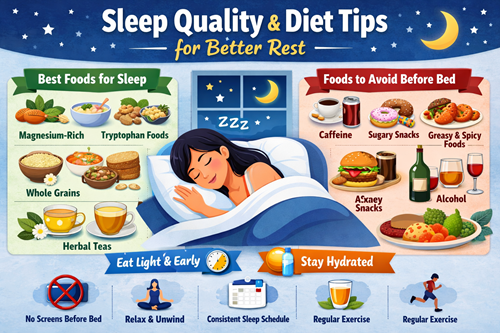
Best Foods for Better Sleep
1. Foods Rich in Magnesium
Magnesium helps relax muscles and reduce stress.
Examples:
- Almonds
- Pumpkin seeds
- Spinach
- Bananas
Including magnesium-rich foods in your evening diet can improve sleep quality naturally.
2. Tryptophan-Rich Foods
Tryptophan is an amino acid that helps produce serotonin and melatonin.
Examples:
- Milk and yogurt
- Oats
- Nuts and seeds
- Eggs
A light dinner with tryptophan-rich foods can support faster sleep onset.
3. Complex Carbohydrates
Healthy carbohydrates help the brain use tryptophan more effectively.
Examples:
- Brown rice
- Whole wheat roti
- Oats
- Sweet potatoes
Avoid refined carbs and focus on slow-digesting, fiber-rich foods.
4. Herbal Teas and Natural Sleep Aids
- Chamomile tea
- Ashwagandha
- Warm turmeric milk
These natural remedies promote relaxation and reduce anxiety, supporting mental health and sleep.
Foods That Harm Sleep Quality
Some foods negatively impact sleep health, especially when consumed late at night.
1. Caffeine and Stimulants
- Coffee
- Tea
- Energy drinks
- Dark chocolate
Caffeine can stay in the body for up to 8 hours, disrupting sleep cycles.
2. Sugary and Processed Foods
High sugar intake causes blood sugar spikes and crashes, leading to restless sleep.
3. Heavy, Oily, or Spicy Foods
These can cause indigestion, acid reflux, and discomfort, making it harder to sleep.
4. Alcohol Before Bed
While alcohol may make you feel sleepy initially, it reduces deep sleep and increases night awakenings.
Best Diet Tips for Quality Sleep
✔ Eat Dinner at the Right Time
Finish dinner at least 2–3 hours before bedtime to allow proper digestion.
✔ Keep Dinner Light and Balanced
Choose a combination of:
- Lean protein
- Healthy fats
- Fiber-rich carbohydrates
Avoid overeating at night.
✔ Stay Hydrated (But Not Too Much at Night)
Drink enough water during the day but reduce intake close to bedtime to avoid sleep disruptions.
✔ Maintain a Consistent Eating Schedule
Irregular meal timing affects circadian rhythm and hormone balance.
Lifestyle Habits That Support Better Sleep
Diet works best when combined with healthy lifestyle habits:
- Limit screen time before bed
- Practice relaxation or meditation
- Maintain a regular sleep schedule
- Get daily sunlight exposure
- Exercise regularly (but not late at night)
Together, these habits improve sleep hygiene, mental wellness, and overall health.
Final Thoughts
Sleep quality is deeply connected to nutrition, lifestyle, and mental wellbeing. Making small, mindful changes in your diet can lead to noticeable improvements in sleep health, energy levels, and daily performance.
By choosing sleep-friendly foods, avoiding harmful eating habits, and following a balanced routine, you support not only better sleep but also long-term physical health, immunity, and emotional wellness.
Good sleep is one of the most powerful forms of self-care — and it starts with what’s on your plate.